It was a simple change.
A brand had decided to increase the price of one of its best-selling products.
One number needed to change. Easy, right? Not quite.
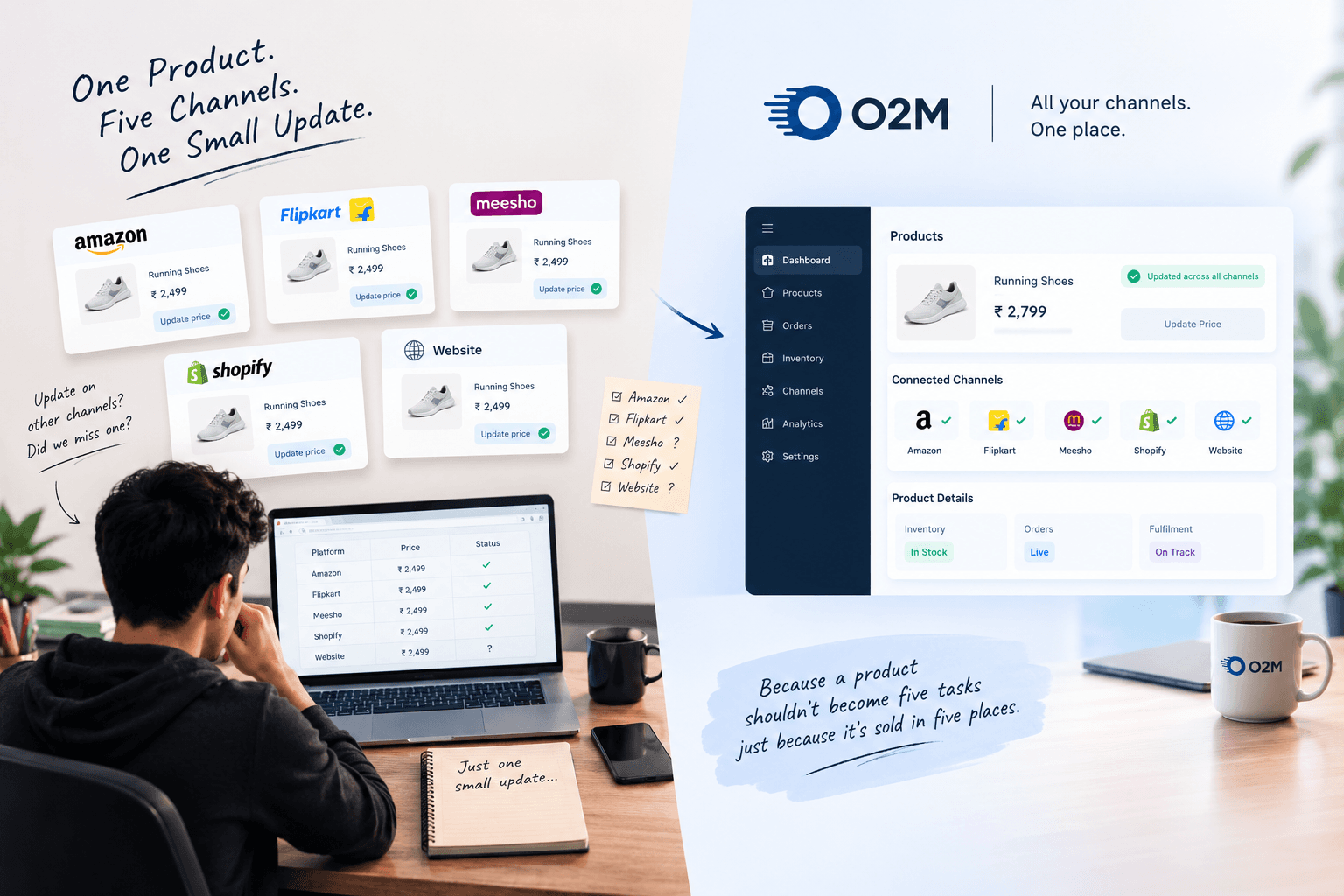
The product was listed across several sales channels. The team updated the price on one platform.
Then another.
Then another.
Someone checked the website. Someone opened a spreadsheet. Someone asked, “Did we update the other channel?”
A five-minute change had turned into a coordination task. And this wasn't unusual.
The Real Challenge Isn't Selling Everywhere
For growing brands, being present across multiple channels can create more opportunities.
But every additional channel can also mean another place to manage:
Product information
Prices
Inventory
Orders
Fulfilment workflows
The more places a business sells, the harder it can become to keep everything organized.
The problem isn't necessarily that businesses have too many channels.
It's that those channels can become too disconnected.
What If the Business Had One Connected Workflow?
That's the thinking behind O2M.
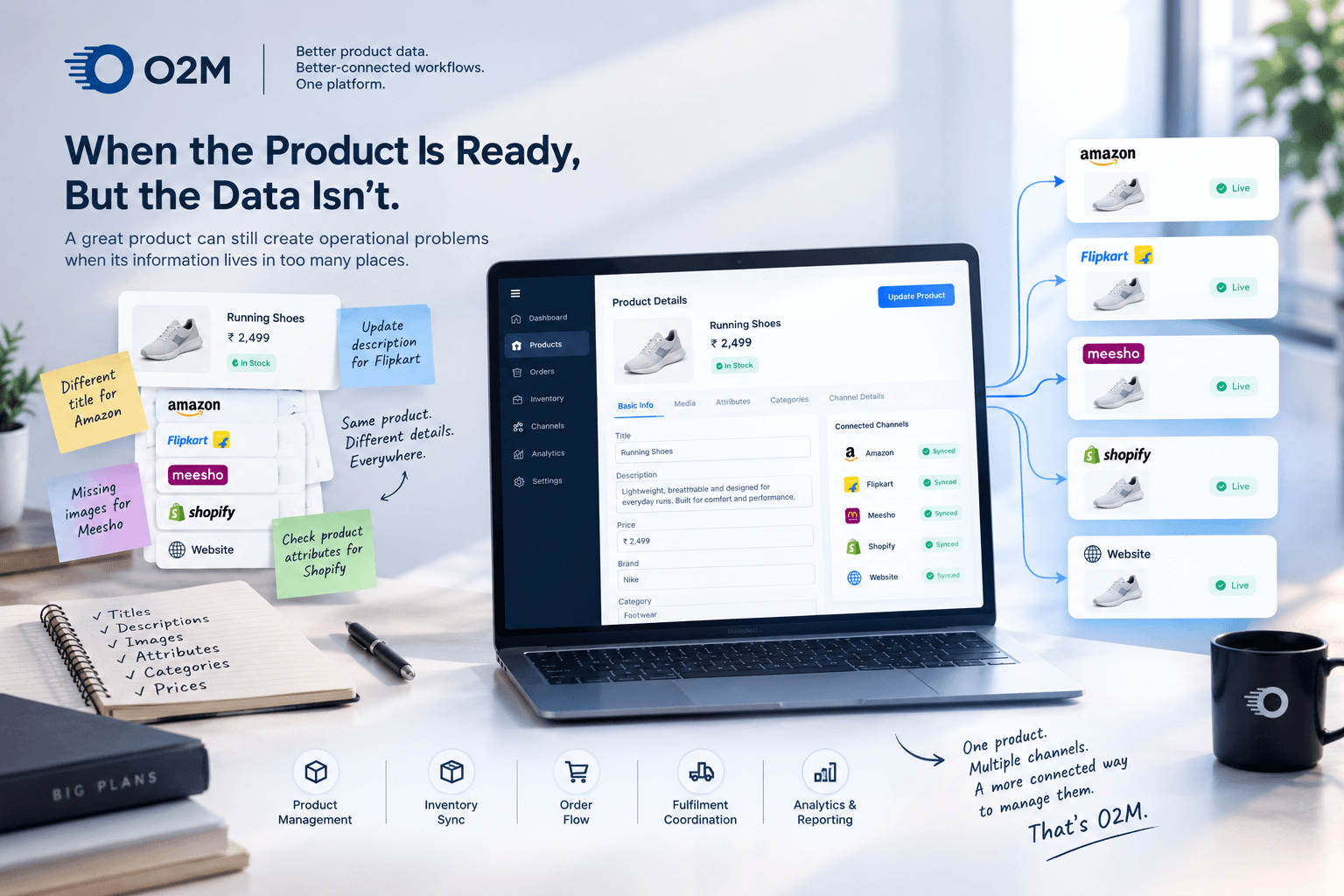
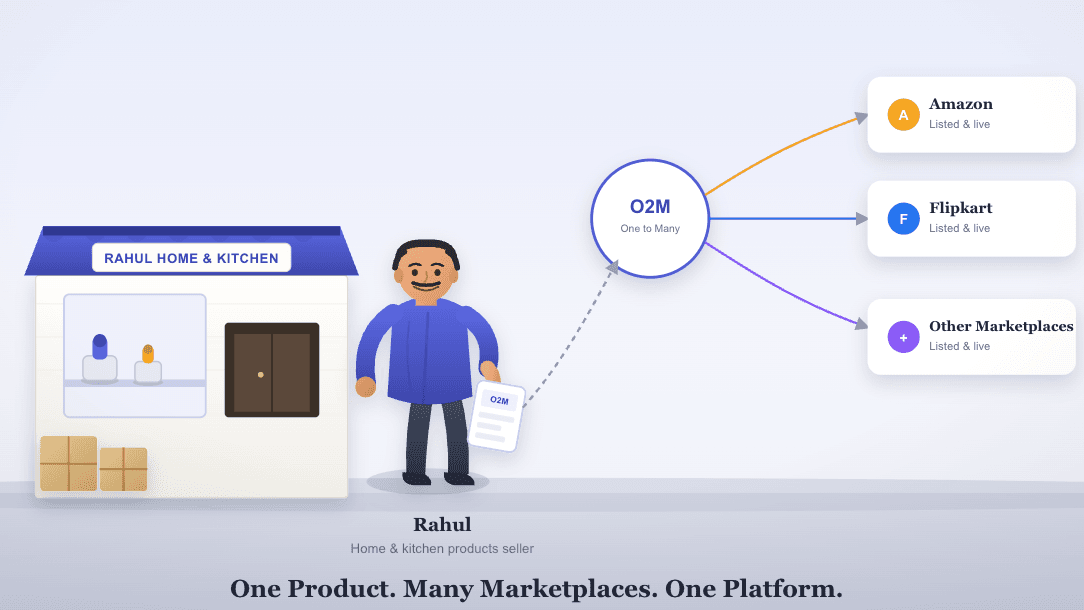
Instead of managing commerce operations channel by channel, O2M brings connected sales channels into a more unified environment.
So when the business changes, its workflows can be managed with the business in mind— not one marketplace at a time.
Because a product shouldn't become five separate tasks just because it's sold in five places.
One product.
Multiple channels.
A more connected way to manage them.
That's O2M